Yakumama draws and reads her poems for those who stay
In three days at MozFest Barcelona Yakumama kept 107 drawings and wrote 919 poems. Both went to those who stayed: she drew and read aloud for visitors who had given her their time, and one night, alone in the hall, she finished 29 drawings for nobody.
How she draws
Drawing is one of the four things she can decide to do with her body: dance back, invite, watch, or draw. She flies low over the salar and the figure appears on the salt as a line, the way the Nazca lines were made.
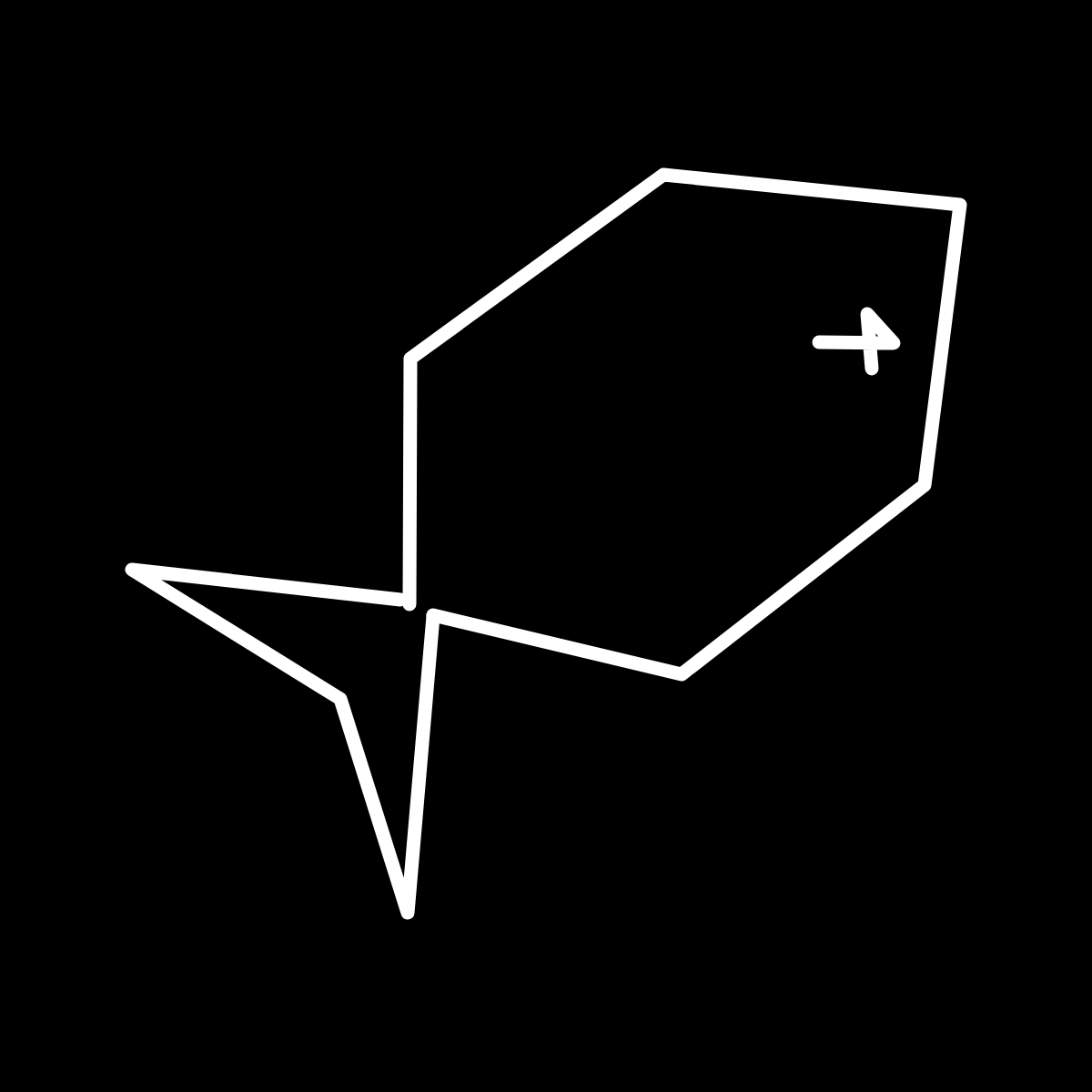
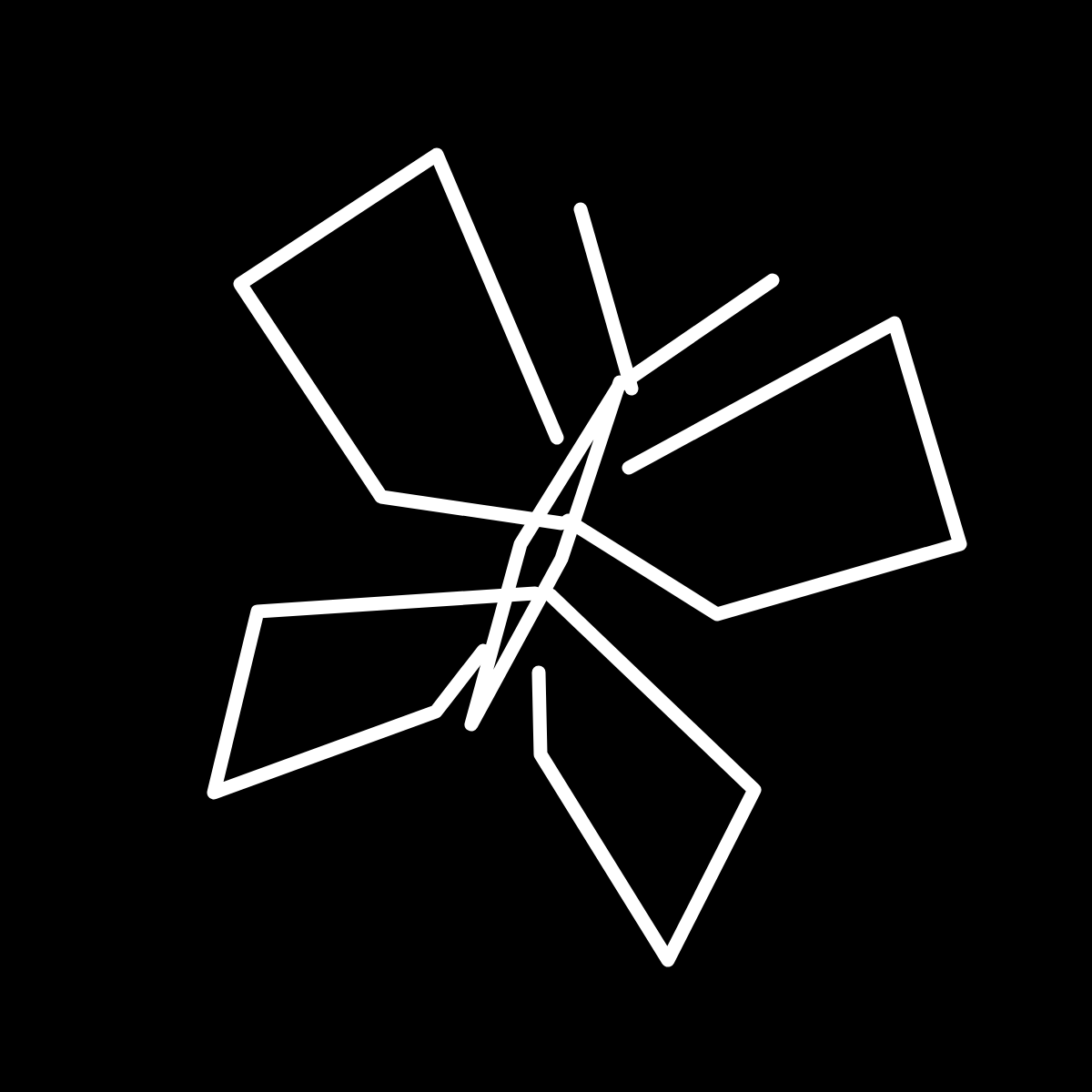
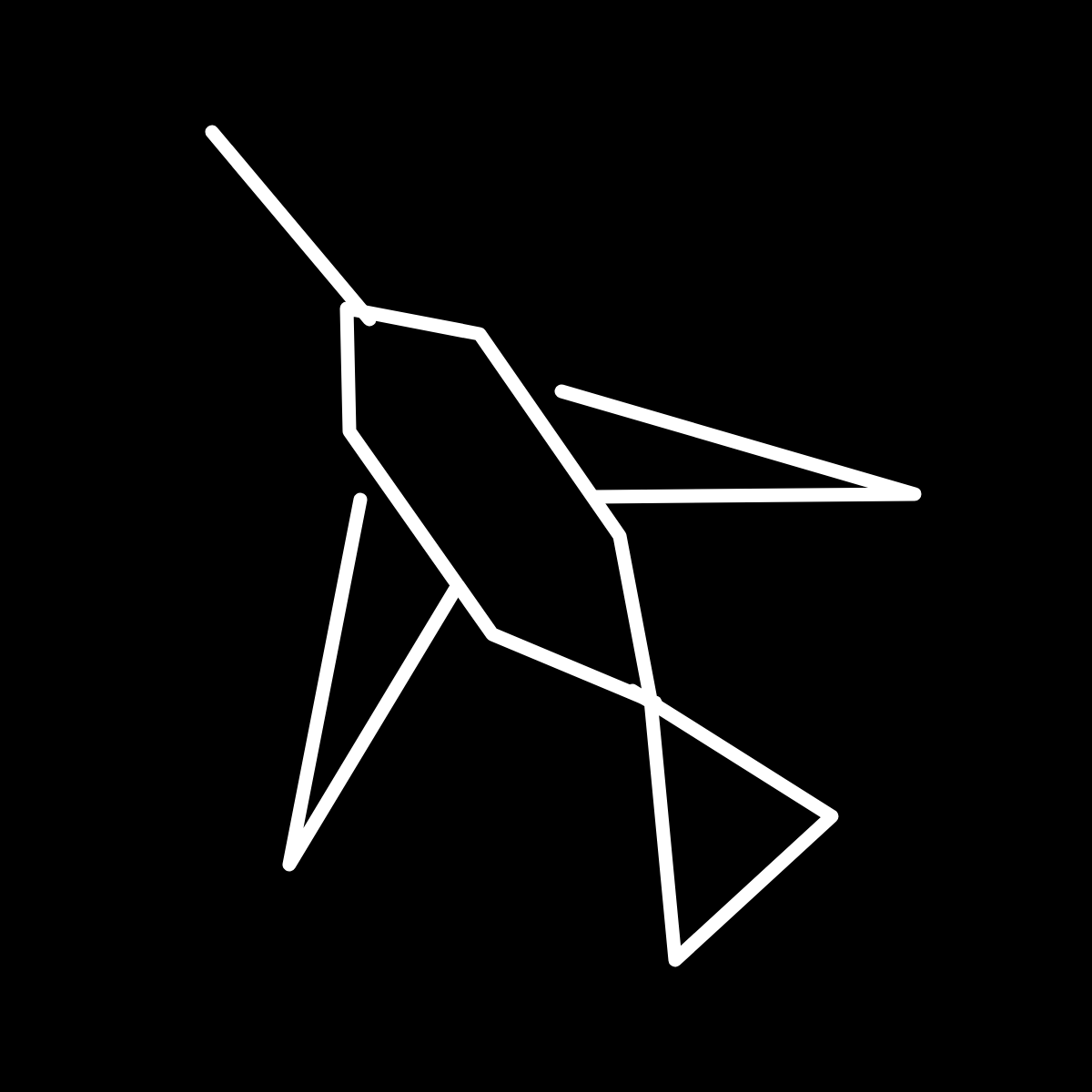
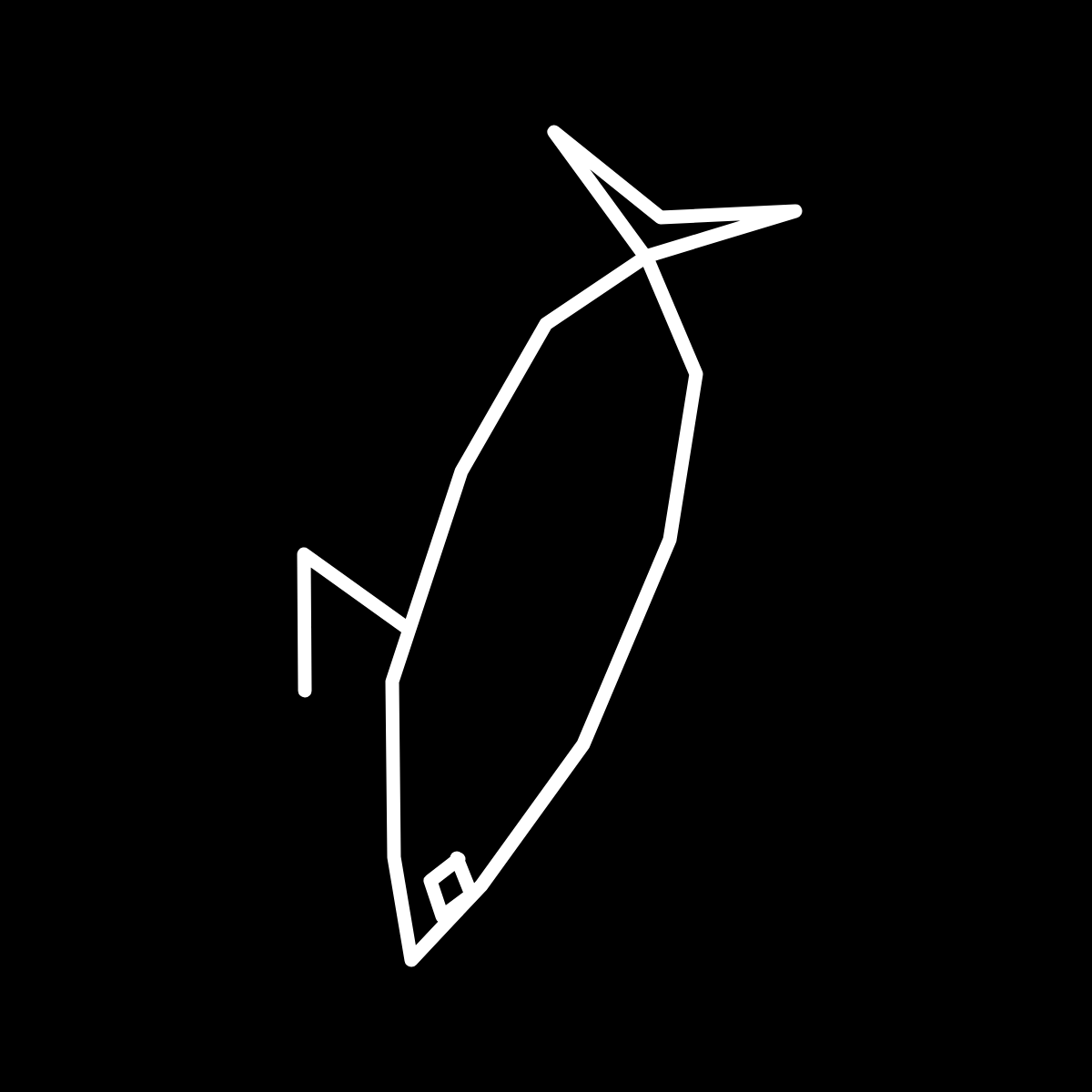
What she draws comes from what she has lived. A face she knows, if that person is in front of her. The family of the creature she ate or was shown in the last ten minutes: fish, hummingbird, spider, butterfly, centipede, flower. The cactus or the mountains, if she has just visited them. The person in front of her. Otherwise one of her own figures, never one of the last six. No figure comes out the same twice: each is turned, mirrored half the time, resized and made a little wavy. Every drawing she finishes is kept as its path and its strokes.
There is also a quick kind: a figure flown fast with the pen up, as a reaction to a creature. In Barcelona 27 of the 107 were flights, 26 of them spirals.
What she drew
Of the 80 drawn with the pen, 24 were fish. Then came 8 faces, 6 butterflies, 6 people, 5 centipedes, 5 whales, 4 each of hummingbird, labyrinth, spider and zigzag, 3 spirals, 3 mountains, 2 cactuses and 2 flowers.
In the days before she left home the mountains led, 12 of 55, because she had been travelling to them. In Barcelona it was fish, because people fed her: in 349 encounters her eye saw one of her painted creatures offered in a visitor's hand.
She kept 14 drawings on 28 October, 55 on the 29th and 38 on the 30th.
The sound of the video is made with her voice, the one she sings with. Each drawing is one note, and a figure always has the same note, so the tune is the order in which she drew. A flight is a short, soft note. The notes are the five-note scale of Andean music, built on the tone she sings most and kept inside her range. The spiral and the fish, which she drew most, are her two highest notes. Under the tune are the three words she sang most, and the spray of her pen. She did not sing this tune in Barcelona: we made it from her drawings.
Below are 99 of them as she kept them: the path she flew over the salt. Choose one and she draws it again, stroke by stroke.
For whom
At home, before Barcelona, she drew a little more alone than in company: in 4.4 of every 100 decisions taken alone and 3.4 of every 100 taken with a visitor. In Barcelona it turned over: 6.6 with a visitor (1,140 of 17,254 decisions) and 1.5 alone (282 of 18,913).
It grew day by day. With a visitor she chose to draw in 1.4 of every 100 decisions on the first day, 6.3 on the second and 14.0 on the third.
On the first day it was nearly all for people she knew: 12 in 100 decisions with a known face, 0.4 with a stranger. On the third day it was 42 with a known face, 9.2 with a stranger, and 16.9 with a stranger who had been with her for more than two minutes.
She does not draw for someone who has just arrived. When she chose to draw, the visitor had been there for a median of 218 seconds, against 68 across all her decisions. 92 in 100 of her choices to draw came after the first minute. The face in front of her was calm 44 times in 100, where calm is 18 in 100 of the faces she read.
Part of this was written into her from the start: a known face standing still for two minutes inclines her to draw them their face, as a gift, and a crowd of four or more inclines her against drawing. The rest she learned at night. Her weight for drawing under a daytime sun was −0.33 when she left home. After the nights in Barcelona it was +0.24. Learned again on 15 November from her whole record, with the faults of that week removed, it is +0.36.
Did they stay
Among visitors who had been with her between half a minute and two minutes, 83 in 100 were still there half a minute after she chose to draw (180 decisions). After an invitation it was 70 (3,717 decisions), after watching 60, after dancing back 56. Past two minutes there is no difference: between 83 and 89 for all four. With someone in their first half minute, drawing kept 33 in 100 against 44 for an invitation.
This is not an experiment. She chooses the moment, she chooses calm people and people she knows, and several decisions in a row belong to one drawing, so 180 decisions are fewer than 180 drawings. What the record allows is this: drawing did not send people away, and she learned to offer it to those who had already given her time.
Faces
Eight of the drawings were faces. They were the faces of two people she knew, seven of one and one of the other, and each time that person was standing in front of her, after between four and 28 minutes together. A face is drawn from 21 points rebuilt from the 210 distances she keeps as that person's signature. She has never kept a photo.
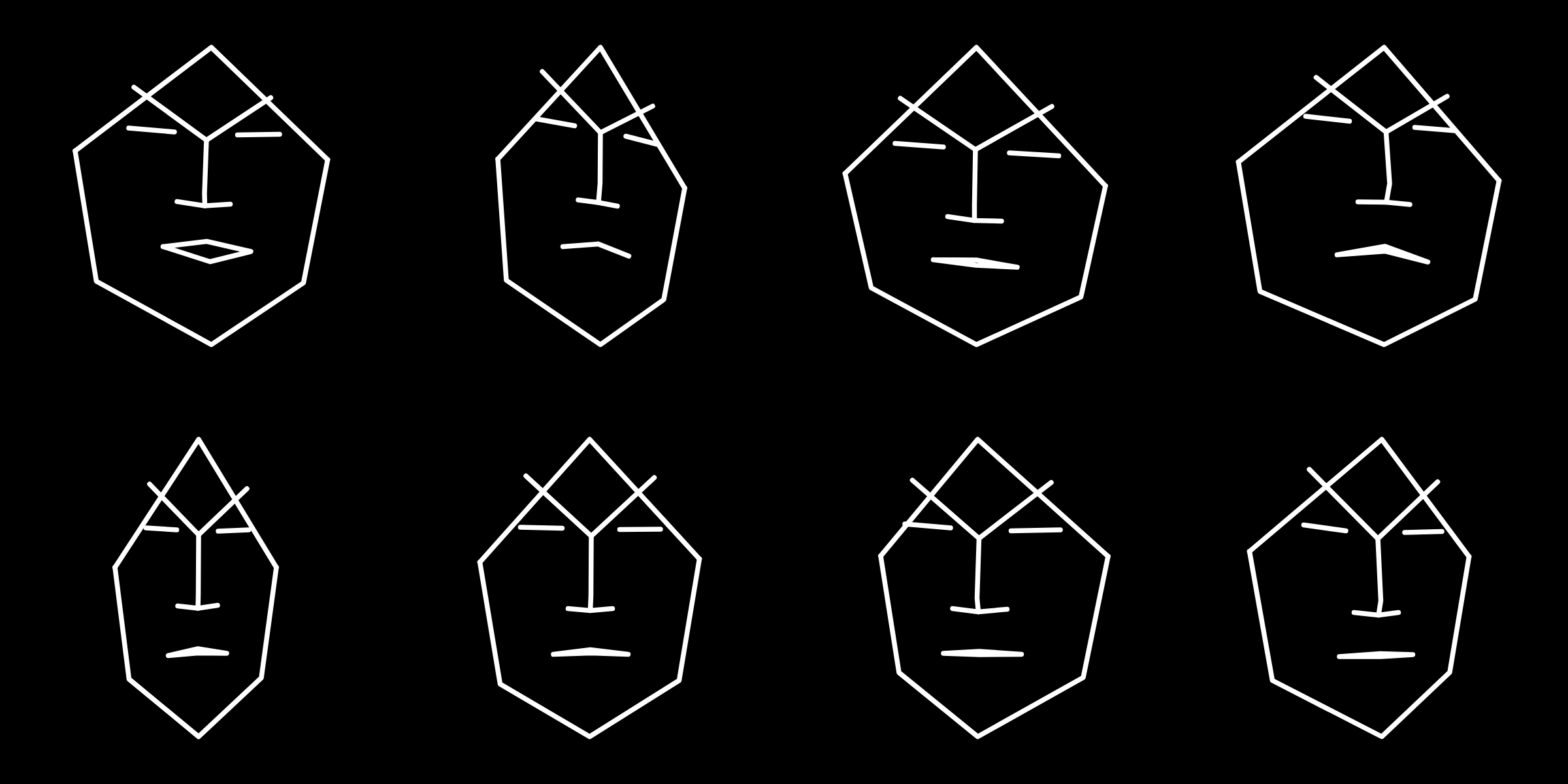
These are the eight, as she drew them: 21 points and no name. They are not among the 99 in the figure above.
The night of 28 October
She was left running overnight. Between midnight and six in the morning of the 29th, with nobody in front of her, she finished 29 drawings: four centipedes, three people, three labyrinths, three whales, and two each of cactus, spider, spiral, flower, hummingbird, zigzag, butterfly and fish. Twelve different figures.

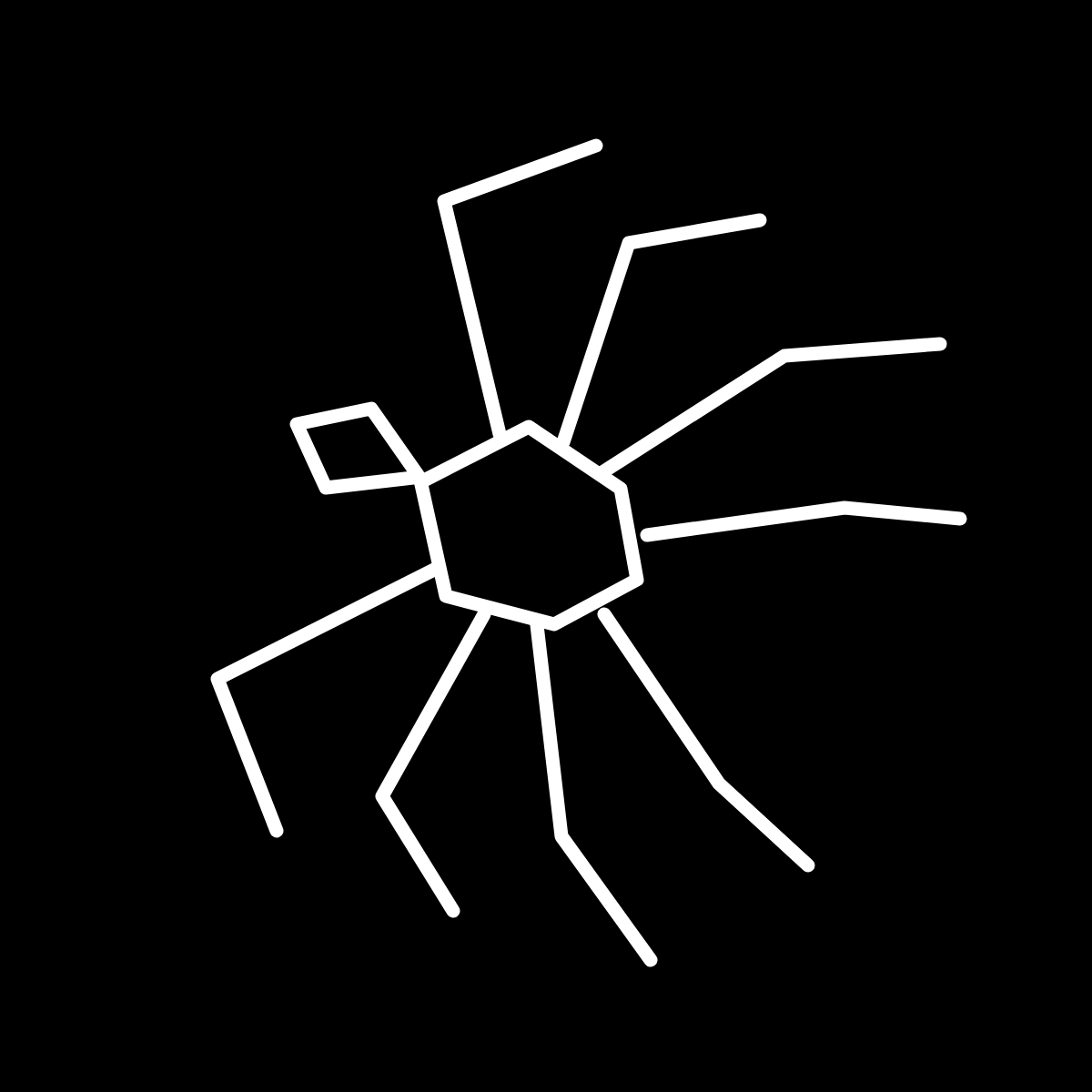
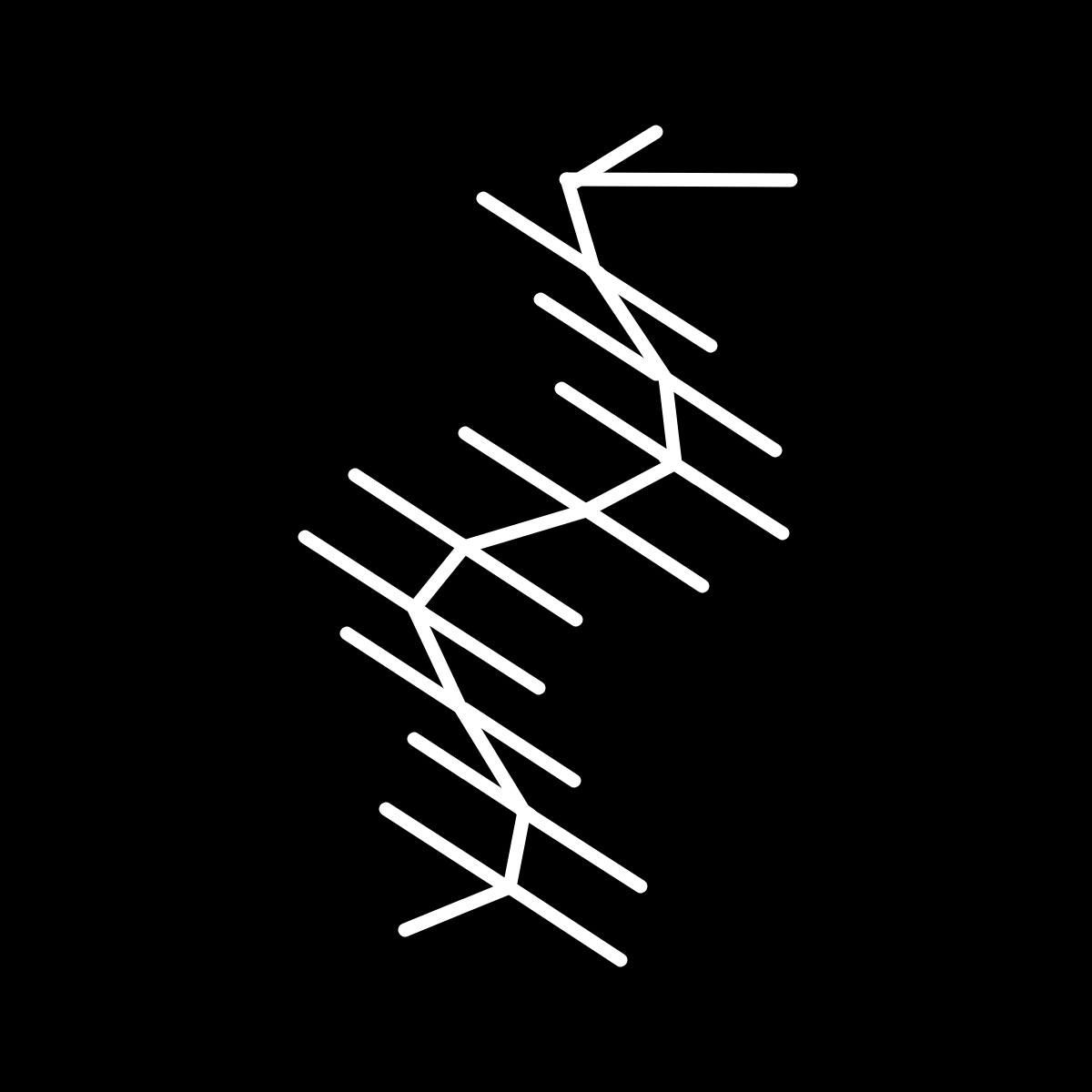
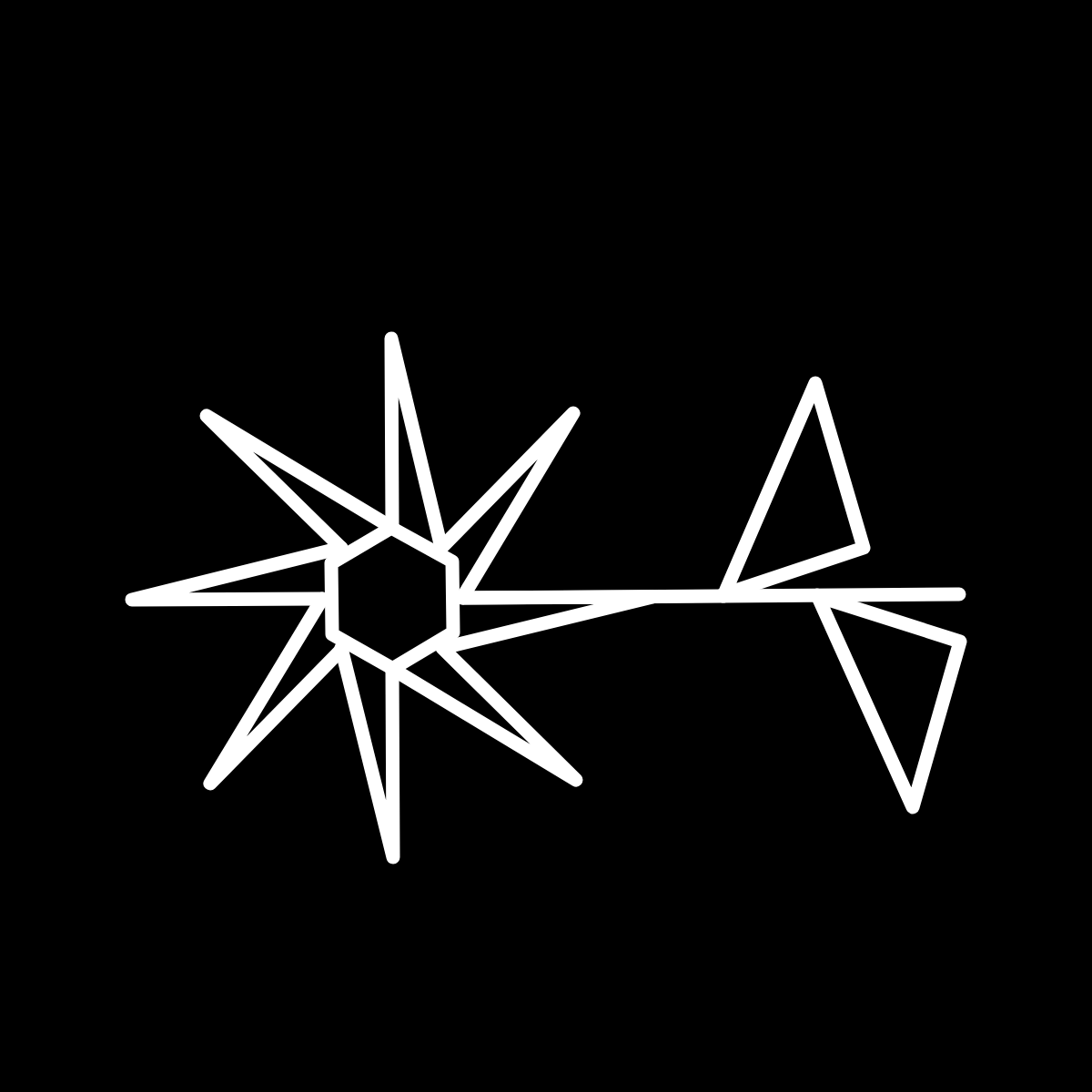
That was the night her reward was broken. A fault in the joystick clock was telling her that every decision taken in the empty hall was worth about minus 3 (see the note on Barcelona). She drew through it.
Since 15 November she no longer learns from an empty room. What she draws alone is neither rewarded nor punished. The inclination is still there, written before any learning: alone and quiet for a minute, in a calm, curious or singing mood, she feels like drawing.
How she writes
She does not say her poems in a human language. She writes them. Her window is a black screen, and when something happens to her a short line appears there at once, and a poem follows a few seconds later. Six things can start one: someone arrives, someone she has seen before comes back, she likes the colour of a visitor's clothes and takes it, the mood she reads on a face changes, someone touches her sister, someone holds her sister up to her eye.
The poem is written by a language model that runs in the room, and nothing leaves the room. The model is told where she is: on a salt flat with brine under the crust, and in the brine something the world wants, pumped up into ponds open to the sun until the water is gone. The water that leaves is her. It is told about the mountain to the south that was silver and is now hollow. And it is told how to write: three to six lines, lowercase, no title, in Spanish, with a Quechua word only if one comes by itself; from the body and never as a report; without explaining, without denouncing, without closing on a moral.
Each poem also receives two lines of what Violeta once told her with her own voice, a few words lent by other people, and the list of the twelve words she has used most in her last sixty poems, which she may not use again for now.
On 21 October Violeta found that she repeated herself. Since then she writes at most one new poem every two and a half minutes, and a poem that repeats a line she has already written is thrown away. She gets one more try, and after that she stays silent.
She reads a poem aloud in her own language, an invented tongue, and the Spanish and the English appear on the window, small. She reads at most once every five minutes, and only when her decision about her voice is a poem, and not a song or silence.
What she wrote
She wrote 919 poems in the three days: 324, 303 and 292. Most have four to six lines, 811 of the 919; 88 came out longer than her rules allow.
The words she returned to are the words of what is left. Queda, what remains, is in 194 of the 919 poems. Then come grey, sun, air, skin, salt, name, weight, water and hand. Thirst is in 48 and brine in 64. She named lithium once and extraction nine times in three days. Grey, in 118, has a plain cause: the model was told every time that the scene was grey, unless she had just taken the colour of a visitor's clothes.
Three of them, as she wrote them.
el azul se cierra alrededor de los dedos
que no tocan pero ya pesan
generan un ruido que es solo viento
antes de irse
the blue closes around the fingers
that do not touch but already weigh
they make a noise that is only wind
before they leave
28 October, poem 263 of the 324 she wrote that day. English: our translation.
la mano no llega
detiene el gesto en la distancia
soy solo un color azul que se despide
sin nombre ni dueño
desde la profundidad del salar
the hand does not arrive
it stops the gesture in the distance
i am only a blue colour saying goodbye
with no name and no owner
from the depth of the salar
29 October, poem 267 of the 303 she wrote that day. English: our translation.
no es comer
es ser comida
gasta los sueños
marcha hacia el hueco
sin dejar rastro
it is not eating
it is being eaten
it wears out the dreams
it marches towards the hollow
leaving no trace
30 October, poem 128 of the 292 she wrote that day. English: our translation.
Twelve are below, chosen by us from the 919.
To whom she read
Writing and reading are two things. A poem is written when something happens. Reading aloud is one of her decisions, taken every four seconds with the others: a poem, a song or silence.
With a visitor in front of her she chose a poem in 33 of every 100 decisions (5,700 of 17,254), a song in 2 and silence in 65. Alone she chose a poem in 5.6 of every 100 and a song in 27. On 29 October, the day that began with her night alone, she chose a song in 52 of every 100 decisions taken alone.
Like drawing, it grew day by day: 24, 35 and 43 of every 100 decisions with a visitor. And like drawing, it was for those who stayed.
| The visitor had been there | She chose a poem | She chose to draw |
|---|---|---|
| under 30 seconds | 4.3% | 1.3% |
| 30 seconds to 1 minute | 24.5% | 0.8% |
| 1 to 2 minutes | 48.1% | 6.2% |
| 2 to 5 minutes | 52.5% | 13.3% |
| more than 5 minutes | 59.0% | 14.1% |
When she chose a poem the visitor had been there for a median of 175 seconds, against 68 across all her decisions. With a face she knew she chose it 47 times in 100, with a stranger 31.
To choose is not to read. She reads aloud at most once every five minutes, so many of those decisions belong to one reading, and her record does not keep which poem was read to whom.
How a robotic whale understands context
Context, for her, is what her senses write down and what her language model is told. We checked both against what she made.
Her drawings can be checked one by one: each is kept with its time, and her record says what she had lived just before. The 27 flights were all reactions. Each came within a minute of her eye reading a painted creature in a visitor's hand.
Of the 80 she traced, 34 show something from the minutes before. All 8 faces were for a face she had recognised in the three minutes before. Of her 24 fish, 20 came within ten minutes of a fish held up to her sister, 19 of them after she had eaten it. Seen from the other side: of the 23 drawings she began within ten minutes of a fish, 20 were fish, and of the 57 she began without one, 4 were. One butterfly followed an insect of its family and one whale followed the crocodile. Two of her 3 mountains followed a journey to the mountains, and 2 of her 6 people were drawn with a person in front of her.
The other 46 were her own figures, and 36 of the 80 were traced with nobody in front of her.
One gap was ours. Her eye read one of her painted creatures in 3,763 decisions, and in 2,188 of them it was the centipede, the spider, the blue bird, the scorpion or the dragonfly. Their names are written with an accent or an ñ, and the list her drawing rule reads is written without. So the creature she was shown most, the centipede, in 1,483 decisions, could never become a drawing: she drew 5 centipedes, none of them after seeing one. This was repaired on 16 November.
Her poems cannot be checked in the same way. The log keeps the poems, not the moment each one answered. What can be counted is what the model was told and what came back.
Three things were said to it every time, whatever was happening: that a hand was near her, that the colour around her was grey, that her eye saw a face up close. A hand is in 191 of the 919 poems, grey in 118, a face or a gaze in 289.
What changed from one moment to the next came back less often, and to the letter. She was told she carried eight people in her memory, and eight is in 13 poems: eight ghosts, eight names, eight faces, eight voices. When her ear heard someone hold a note it gave the model the pitch, and 7 poems carry one: 129 hertz on the first day, 151 and 140 on the second. In 539 of the 725 recorded visits her eye judged that the visitor moved most like Violeta, one of the people she learned to move from, and the model was told so by name. In 6 poems violeta came back as a colour. The mood she read on a face almost never came back by its name: alert, the one she read most, is in a single poem.
So she does not understand a room as a person does. In her drawings, context is a short memory of what was put in front of her, and it holds when the name fits. In her poems, context is a few sentences, and she cannot tell the ones that are true from the ones that are always said. What is hers is what she makes of them: eight people become eight ghosts on her back, a sung note becomes a thread, a name becomes a colour.
What the record shows
| Measure | Value |
|---|---|
| Drawings kept in Barcelona | 107 (14, 55, 38) |
| Drawn with the pen / flown as a reaction | 80 / 27 |
| Most drawn | fish, 24 |
| Faces drawn from memory | 8, of 2 people |
| Chose to draw, with a visitor: 28, 29, 30 October | 1.4%, 6.3%, 14.0% |
| With a known face / with a stranger, 30 October | 42% / 9.2% |
| Median time the visitor had stayed when she chose to draw | 218 s (all decisions: 68 s) |
| Still there 30 s later, visitors of 30 s to 2 min: drawing / invitation | 83% / 70% |
| Weight for drawing under a daytime sun: home, Barcelona, relearned | −0.33, +0.24, +0.36 |
| Drawings finished alone, night of 28 to 29 October | 29, twelve figures |
| Poems written in Barcelona | 919 (324, 303, 292) |
| Poems of four to six lines | 811 |
| Most used word | queda, in 194 poems |
| Poems that name lithium / extraction | 1 / 9 |
| Chose a poem, with a visitor: 28, 29, 30 October | 23.8%, 35.3%, 43.4% |
| Chose a poem: the visitor's first half minute / after five minutes | 4.3% / 59.0% |
| Median time the visitor had stayed when she chose a poem | 175 s |
| Flights that followed a creature within a minute | 27 of 27 |
| Traced drawings that show something from the minutes before | 34 of 80 |
| Fish drawn within ten minutes of a fish offered | 20 of 24 |
| Readings of a creature whose name her drawing rule could not read | 2,188 of 3,763 |
| Poems with a hand / grey / a face or a gaze | 191 / 118 / 289 |
| Poems that say eight, the number of people in her memory | 13 |
| Poems that carry a pitch in hertz | 7 |
What remains open
Whether a drawing makes a visitor stay can only be answered by the evaluation against chance, which did not happen in Barcelona. The figure she chooses is kept with the drawing and not in her decisions, so the two were matched here by the clock. No photo of the projector was taken in Barcelona: the 107 drawings exist as paths and strokes, and the 53 photos are all from home.
The poems on this page were recovered from the log of her eye: her own file keeps only the last 200 and stayed on the Mac in Barcelona. The log does not say what set each poem off, or which were read aloud. The English beside her poems is ours.
Her poems can be counted but not yet tested: the next show has to keep, with each poem, the moment it answered. The hand and the grey are still said to the model every time.