A robot's dance has to begin in a pose the robot can stand in
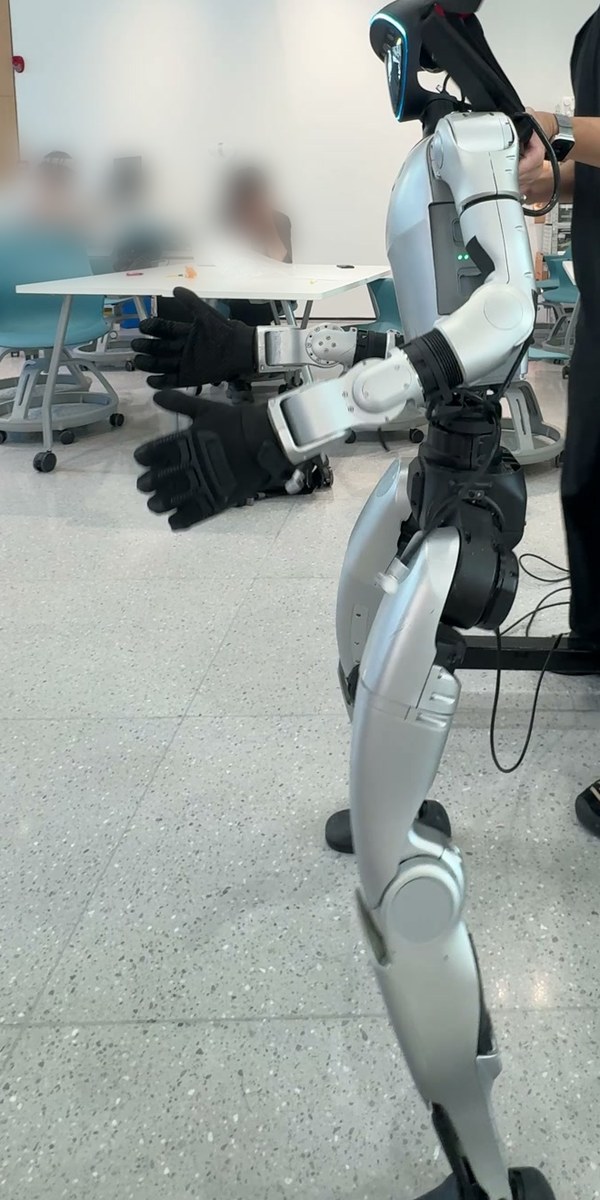
On 5 November a humanoid robot in Guangzhou stood on its own feet, took one of our dances and was down six seconds later. To see how it had begun, we ran our dances in simulation from the same standing start and put them beside the video. One of them begins exactly as the robot did, and its two still seconds turned out to be a pose that no dancer and no robot stands in.
Six seconds on the floor
It was our second afternoon with the Unitree G1 of Professor Xin Tong's group in the CMA Lab of the Hong Kong University of Science and Technology, on its Guangzhou campus. Violeta and Dan had travelled there that week. Violeta gave a class with Professor Pan Hui, and Professor Xin Tong and Jie Yu, a doctoral student, were their hosts. The robot stood on its own feet under a hoist, with the rope slack. It stayed there for 55 seconds, held up by the balancing policy that comes before a dance.
Then one of our dances was started. The robot brought its forearms forward, leaned, took a wide step and turned. Six seconds later its legs gave way and Jie, who was operating the robot, caught it by the harness.
Three of our dances were loaded on the robot that afternoon, and we had video of those six seconds from two phones.
What we were asking the robot to do
The kullawada with the slow start lasts 50 seconds. That is 73,196 angles. Over those 50 seconds it asks the robot to move as far as 1.33 metres from where it starts, to turn its hips 1,922 degrees in all, counting both directions, to lift a foot 24 centimetres, to bend a knee to 103 degrees and to raise a hand to 1.34 metres, just above its own head.
The first six seconds ask for much less. Two seconds with every joint at zero. Then, slowly, the left knee bends past 90 degrees and the left foot rises 21 centimetres, so that at second five the robot is standing on its right leg. At second six the foot is back on the floor.
That is the dance's first step. The robot went down at second six.
| What is asked | The whole dance, 50 s | Its first 6 s |
|---|---|---|
| Motor angles sent | 73,196 | 8,700 |
| Farthest from where it starts | 133 cm | 34 cm |
| Turning, added up | 1,922 degrees | 18 degrees |
| Highest foot | 24 cm | 21 cm |
| Deepest knee bend | 103 degrees | 97 degrees |
| Highest hand | 134 cm | 122 cm |
Three ways to begin
The three were a kullawada slowed to 70 per cent, entered at a calm passage in its middle. A suri sicuri slowed to 80 per cent, entered the same way. And a kullawada trained overnight to start gently: two seconds still, then ten seconds rising from 30 to 70 per cent of its speed. Lucía, a dancer of the Ballet Folclórico, danced the kullawada. No person danced the suri: Paqarina's AI model created it.
Each of the three is a neural network that practised its dance in simulation. In our simulator, built on the robot's official model, each one takes over from the same standing start and stays up.
So we filmed them there. The same start, a camera where the phone had been, and the first seconds after the dance takes over.
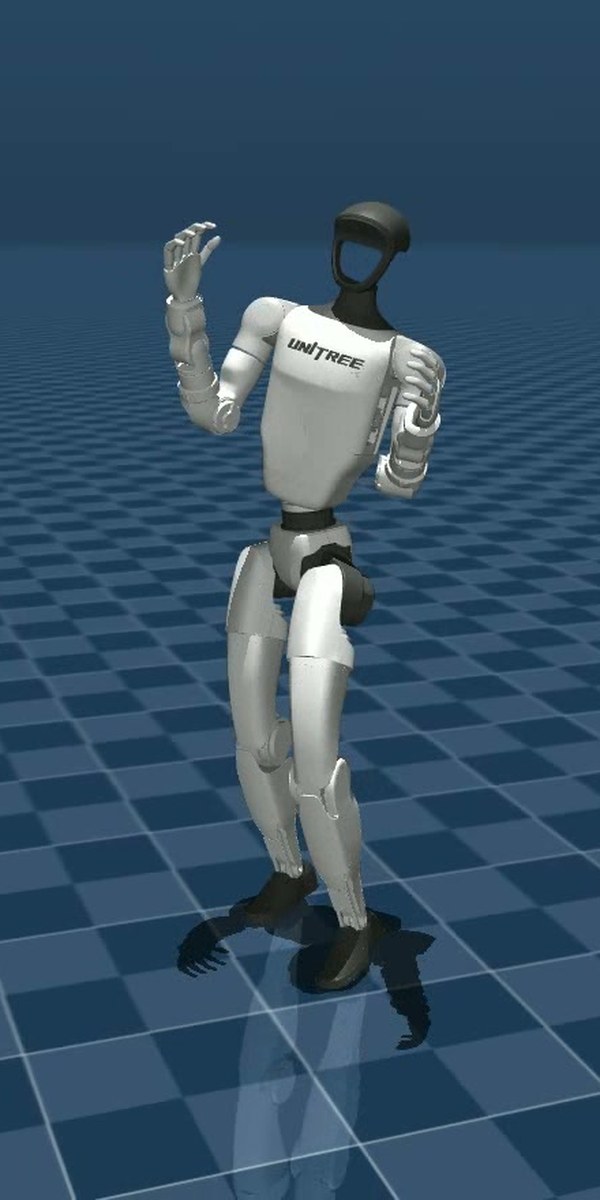
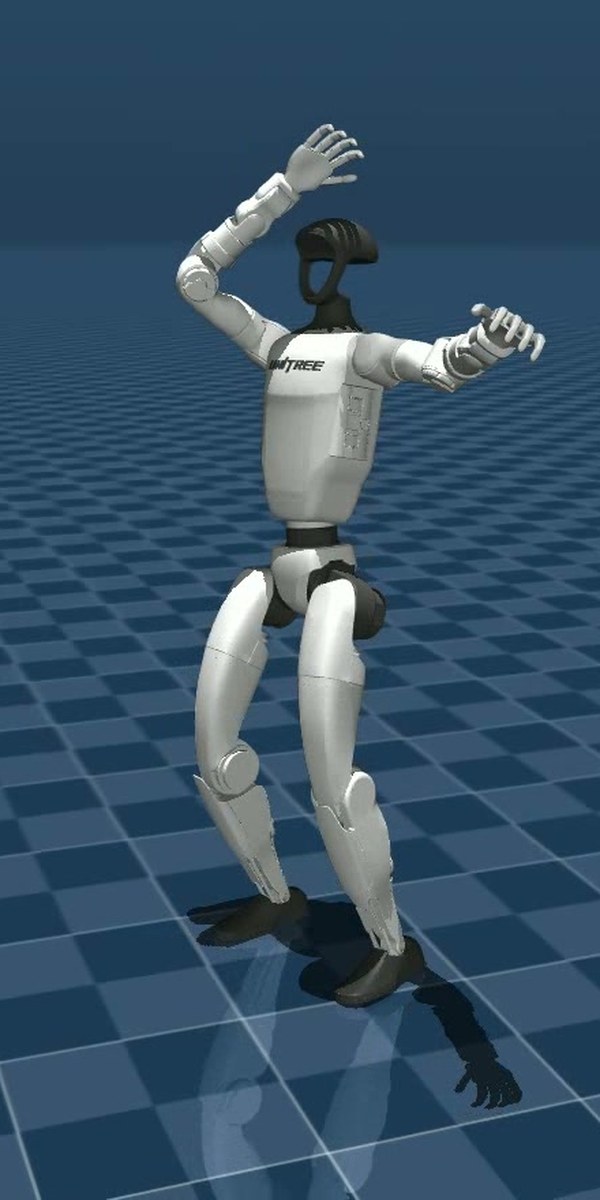
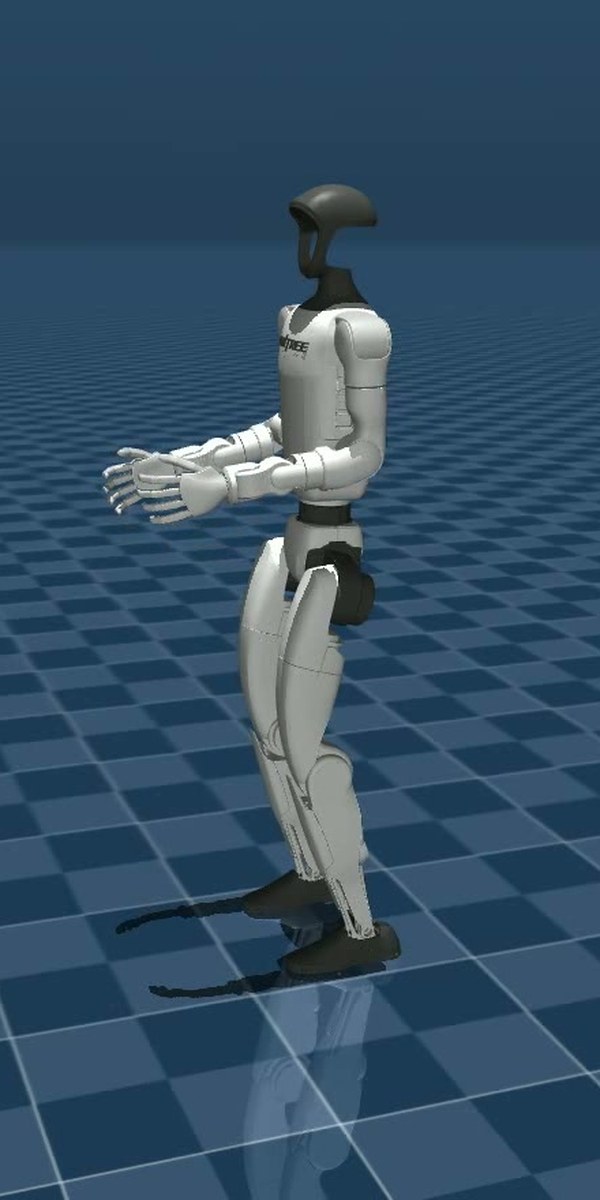
Half a second in, they are three different bodies. The kullawada at 70 per cent has its hands up by its head and is already turning. The suri has one arm over its head and the other out to the side. The kullawada with the slow start has both forearms forward at waist height, and nothing else is moving.
The match
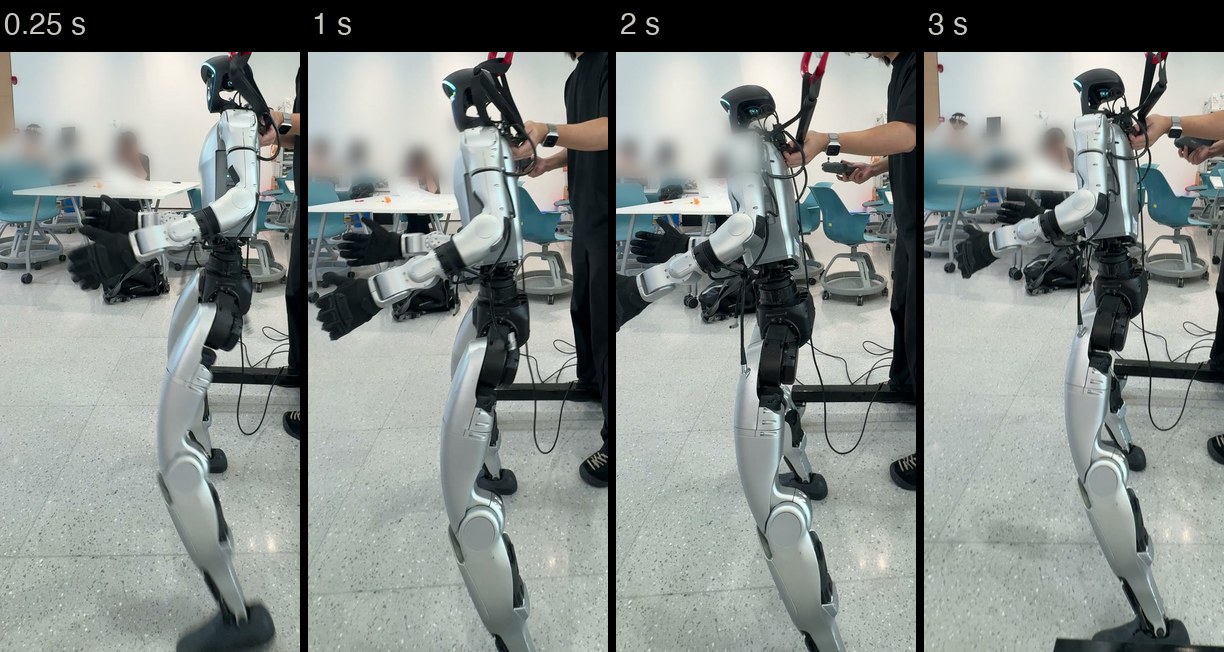
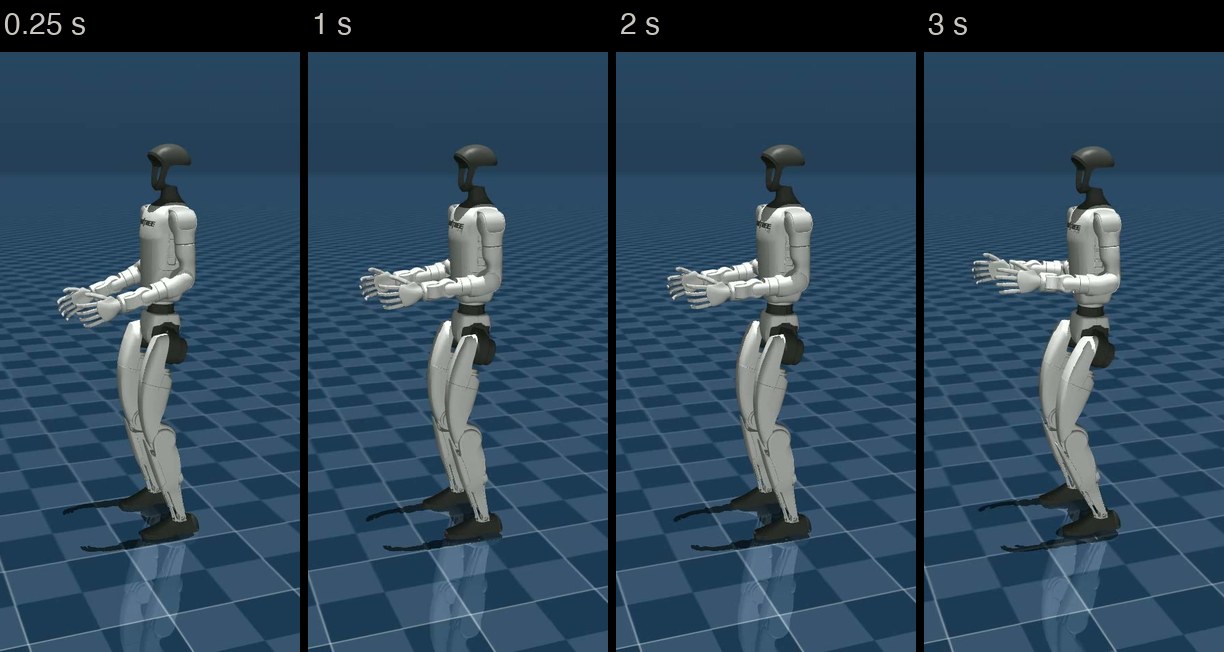
The robot in the lab holds its forearms forward at waist height through the first two seconds. It does not raise its arms and it does not turn. It is the kullawada with the slow start.
A pose nobody stands in
We had asked for two still seconds so that the robot could take the dance over calmly. We had not looked at what still meant.
In the file, still is every joint at zero. On this robot, zero is not standing. The knees are locked straight and the forearms point forward.
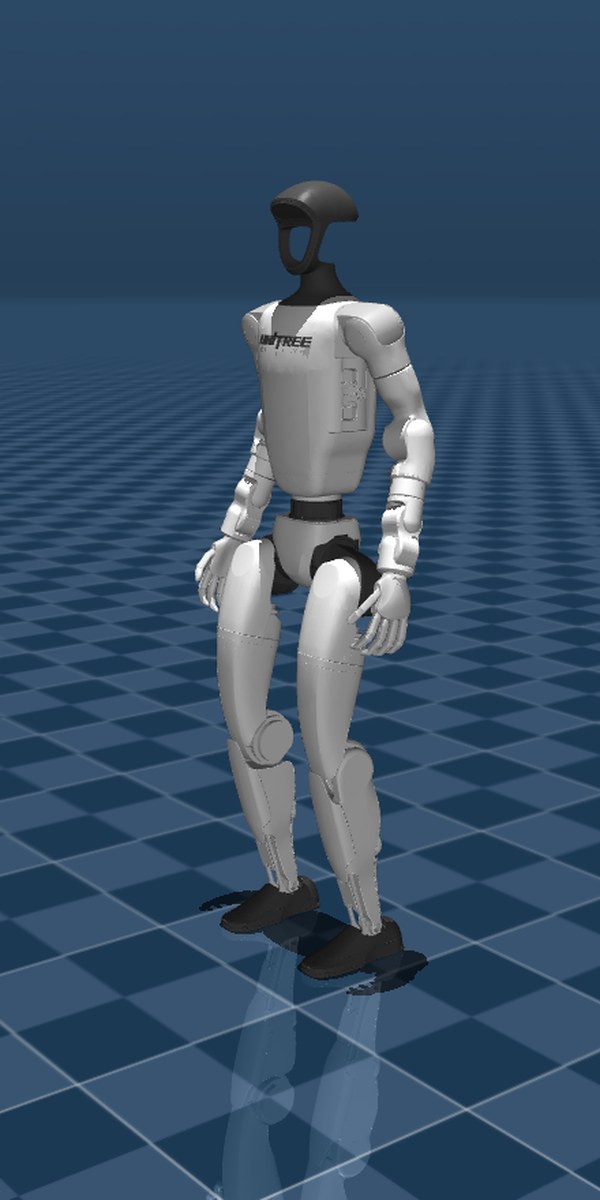
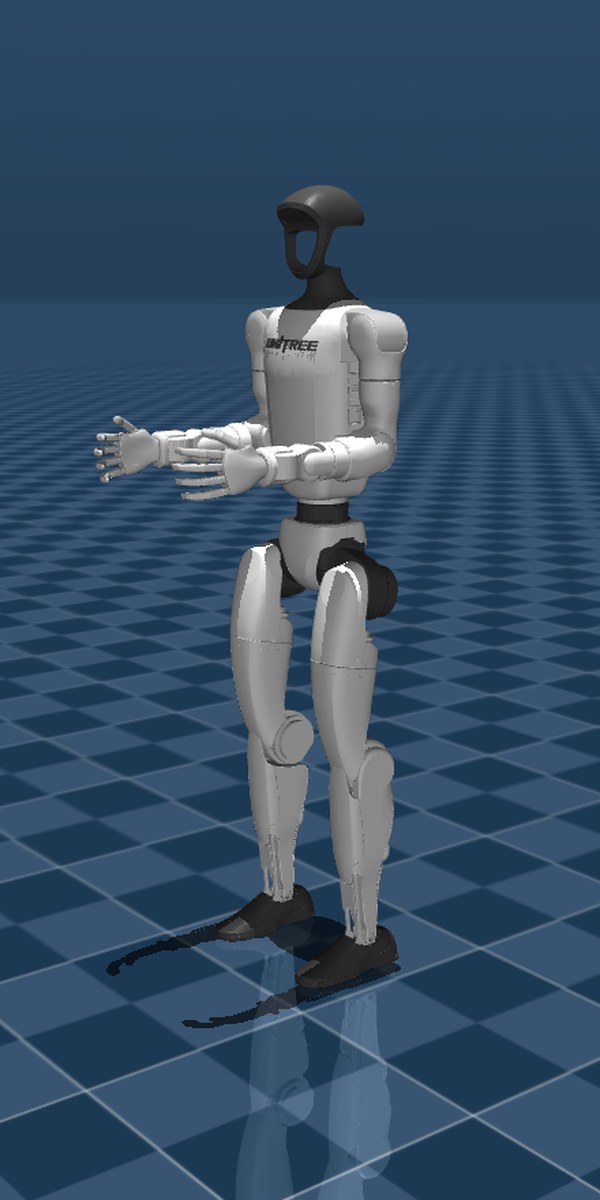
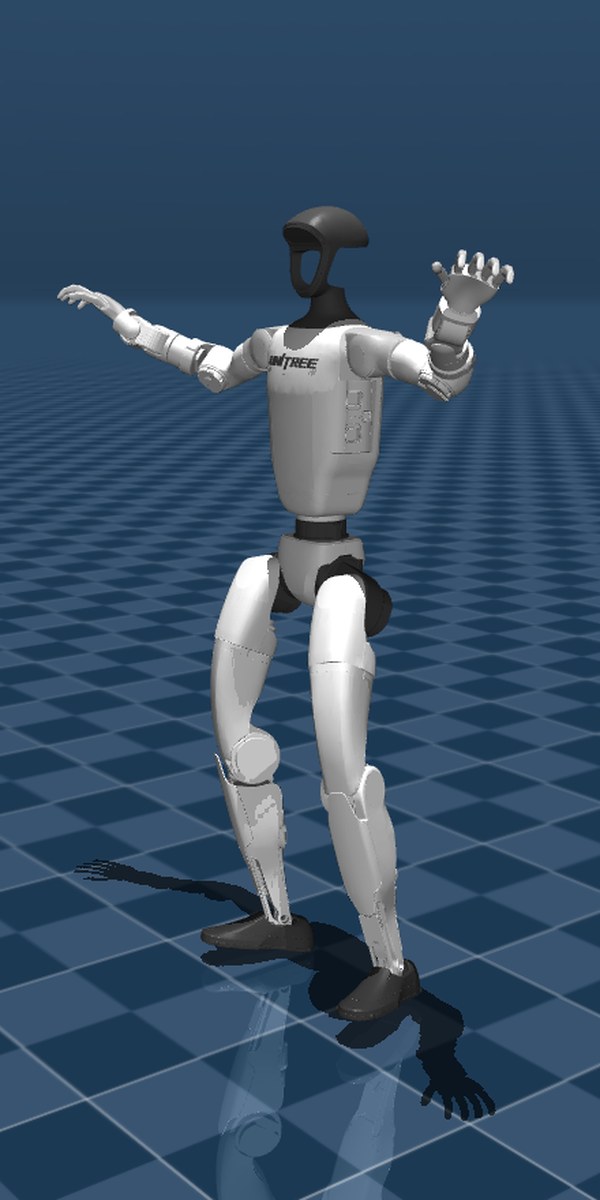
The robot does not arrive like that. The balancing policy hands it over with the knees bent 17 degrees and the arms hanging. So the first thing our gentlest dance asked of the robot was to lock its knees, at once.
The zero is in all eight dances we took to Guangzhou. Each begins with one frame, a fiftieth of a second, in which every joint is at zero. Nobody sees one frame. The slow start held that frame for two seconds.
The manufacturer's example dance, which is public, begins differently. Its first pose is a real standing pose, with the knees bent about 25 degrees, and it holds it almost still for five seconds.
Why the simulator did not warn us
In simulation the dance held from that pose, 20 runs of 20. The network had practised exactly that: locked knees first, then the dance.
The simulator checks whether the robot stays up. It does not ask whether the first pose is one a standing robot should be asked to take.
On the floor the robot leaned at once. We cannot yet say that the locked knees are why it fell. It is the first thing we will change.
What we do differently
Three habits come out of this afternoon.
The first is to look at the first frame of every dance before it goes near a robot.
The second is to simulate the entry after every test and put it beside the video. A dance can be told apart by how it begins.
The third is to film every test from the side. The side view is the one that settled this.
Thanks
Paqarina is a Mozilla Fellowship project.
Thanks to Dr Pan Hui, Professor Xin Tong and Jie Yu for allowing us to test our policies on the robot.
What the record shows
| Measure | Value |
|---|---|
| Time on its own feet before the dance | 55 s |
| From the start of the dance to the fall | about 6 s |
| Dances of ours loaded that afternoon | 3 |
| Dances that begin still, with the forearms forward | 1: the kullawada with the slow start |
| Its still start | 2 s with every joint at 0 degrees |
| Knees in that pose | 0 degrees, locked straight |
| Knees when the balancing policy hands over | 17 degrees |
| Knees at the start of the manufacturer's example dance | about 25 degrees |
| Our dances whose first frame is all zeros | 8 of 8 |
| The slow-start kullawada in simulation | standing in 20 runs of 20 |
| Complete dances on the real robot | 0 |
What remains open
Whether the locked knees are what brought the robot down: one test does not say. Whether the same dance holds on the floor when its still start is a standing pose, which means training it again, more than nine hours, and another afternoon with the robot. Why the simulator forgives a pose that the floor does not. The robot stood for 55 seconds and danced for six. The next dance begins the way the robot stands.