Research
The lab is in Cochabamba. It builds creatures, sensors and worlds that respond to bodies, environments, memory and emotion in real time. These notes are its archive: experiments, failures and breakthroughs.
2026
, Cochabamba
Paqarina's new model dances with the energy of its dancers
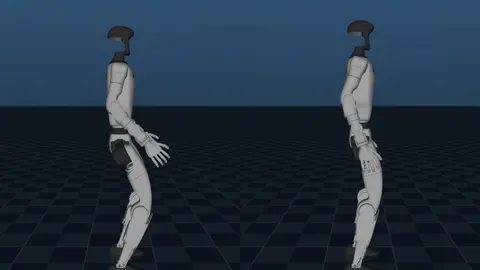
Paqarina, a Mozilla Fellowship project, is an AI model that learns Bolivian dances from the people who dance them and generates them for an avatar and a humanoid robot. On 18 November 2026 six dancers in Cochabamba, Bolivia, danced the same music for it, alone and in pairs, and two days later a new model had studied them. This note is about what changed on the way: a filter that was unfair to short arms, a measure that rewarded standing still, and a model that now moves like the people it learned from.
Jev, Laya, CatDecide and a model of her own
Yakumama's second opinion is a model that answers fixed questions with a probability and never writes a sentence. This note tells where that idea came from, what two such models did beside her, and what it means that she now has one trained on her own record.
, Cochabamba
Paqarina generates the dances it learned, for an avatar and for a robot
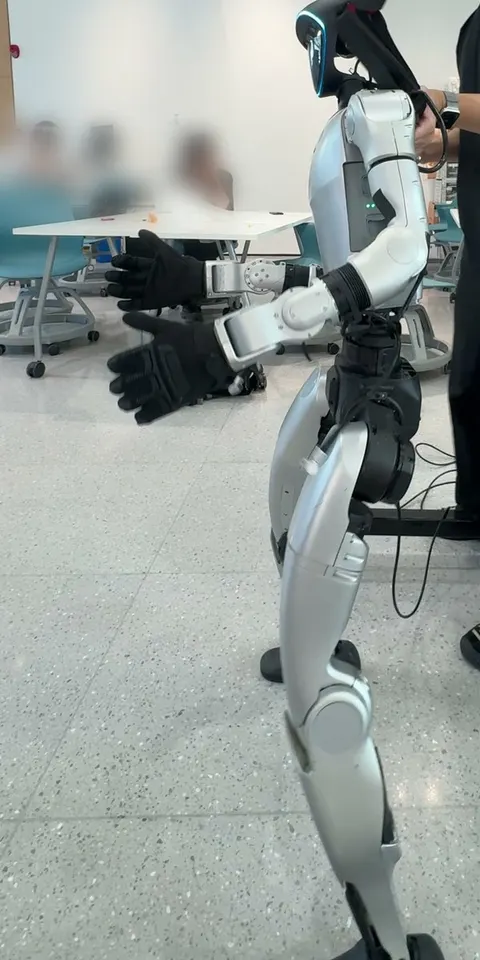
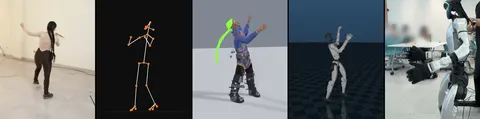
Paqarina, a Mozilla Fellowship project, learns the dances of our community from the bodies of the people who dance them. Then it generates them: as novel dance that nobody danced, or as a remix of what was danced, joined by how the pieces fit together. And because it is modular, the same dance moves two bodies: an avatar in Blender and a humanoid robot.
, Cochabamba
A community can take its own dances to a robot
Robots that dance exist, and so do archives that keep dance as movement. What this work adds is a chain that a community can run by itself: its own dances, recorded with four cameras, taken as far as a real robot with more than 250 dollars of rented computers. This note says what already existed, what is new, and what is not.
, Cochabamba
A dancing robot still needs a person to decide
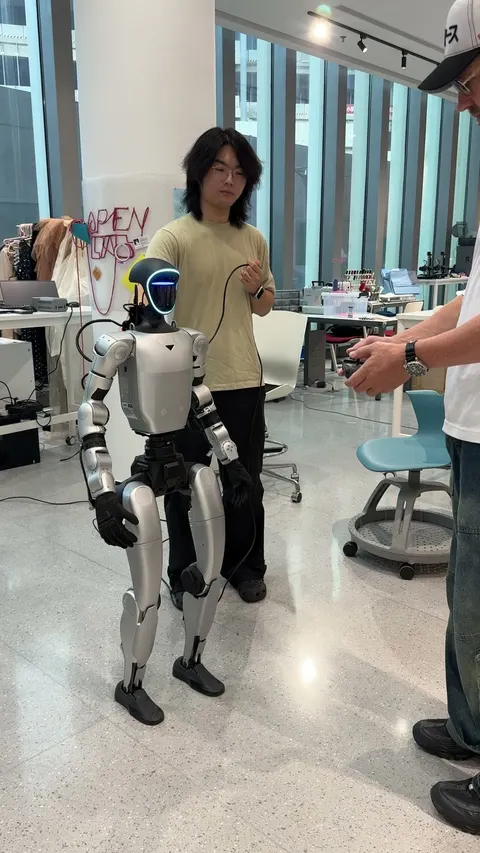
On 13 November 2026 twelve researchers published a proposal for what they call agentic robotics: a robot built in three layers, a way to test the whole system, and four levels of autonomy. We placed Paqarina inside it. Our robot has the two lower layers, and the layer that decides is still a person with a remote control.
, Cochabamba
A robot learns the kullawada
A dance fitted to a robot is only a list of angles. To dance it the robot has to practise: thousands of copies of it try the kullawada at once in simulation, fall, and try again. This note is about that practice, and about the check that caught what the practice had missed.
, Cochabamba
A robot's dance has to begin in a pose the robot can stand in
On 5 November a humanoid robot in Guangzhou stood on its own feet, took one of our dances and was down six seconds later. To see how it had begun, we ran our dances in simulation from the same standing start and put them beside the video. One of them begins exactly as the robot did, and its two still seconds turned out to be a pose that no dancer and no robot stands in.
, Cochabamba
For a robot, choreography is a planning problem
A choreography can be written in one line: tinku 10, kullawada 10, breaking 10. For a robot that line is a planning problem: a sequence of movements, through space and time, that a body with 29 motors can hold. This note describes how Paqarina turns the line into movement, and the forms the same dance takes on the way: picture, points, words, sound and motor angles.
, Cochabamba
Two programs cannot drive one robot at the same time
A humanoid robot can be moved in two ways. Asked to walk, it takes a speed and a direction and decides its own steps. A dance tells each of its 29 motors where to be, fifty times a second, with nothing else keeping the robot upright, and the two cannot run at once.
Yakumama at MozFest: what three days in Barcelona taught her
Yakumama spent 28 to 30 October 2026 at MozFest in Barcelona with her sister, her physical robot twin. Read two weeks later, her record shows a whale who was fed, wrote 919 poems and kept 107 drawings, and who moved away from most of the people who came to see her.
Yakumama draws and reads her poems for those who stay
In three days at MozFest Barcelona Yakumama kept 107 drawings and wrote 919 poems. Both went to those who stayed: she drew and read aloud for visitors who had given her their time, and one night, alone in the hall, she finished 29 drawings for nobody.
Yakumama feels her fins, chooses her sound, and dies on Mars
Yakumama's printed body began reporting what its fins actually do, the sound beneath her became a choice she learns, and her salt flat gained two worlds beside it: the red earth of Tiupampa and Mars. When the world is too hot, read from the air, NASA's fire count and her own motors, she gets angry, leaves for Mars, dies there and is reborn in the salar at sunrise.
Yakumama feels her own fins
Yakumama now feels her printed fins, blinks with the eyelids of the 426 people she has watched, and can be measured against chance. Notes from 22 October, six days before MozFest Barcelona.
, Cochabamba
Paqarina: teaching a robot to dance Bolivian
Bolivian dancers taught an AI the tinku, the kullawada, the suri sicuri and breaking. Eight of those dances now stand on a simulated humanoid, and on 2 November they reach a real robot in Guangzhou.
Yakumama, the story so far
Yakumama is a whale who lives in a salt flat and answers the people who come to see her. Between August and October 2026 she got a body, senses, a memory, a voice of her own and a physical sister in Barcelona.
Yakumama: one decider and a body that reports back
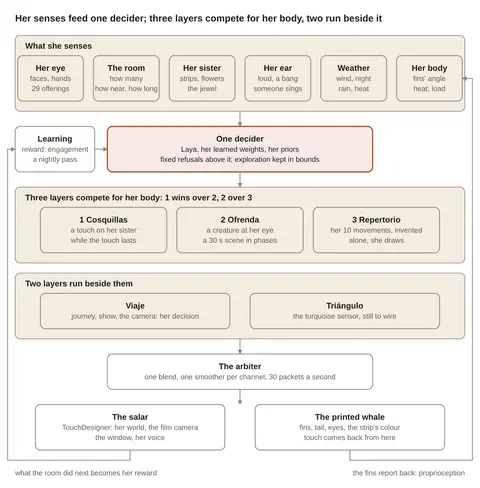
On 21 October 2026 Yakumama stopped being a set of behaviours and became a single decision-maker. She gained a body that reports back, and spent an afternoon with real visitors whose engagement she now learns from
, Cochabamba
The jaguaress learns her own skeleton
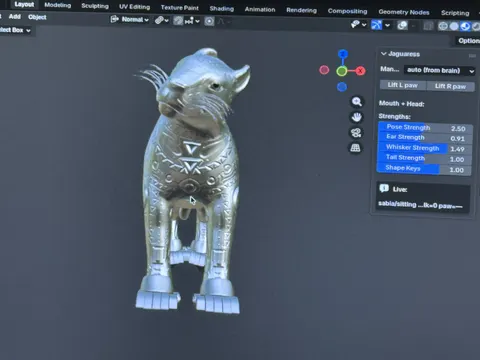
Huk the Jaguaress recovered her twenty-four real poses from an export that only looked finished: a faithful carousel exposed a smooth interpolation, an exporter rewritten to read the rig’s true keyframes brought the body back, and the question turned from how she moves to why.
, Cochabamba
The whale that watches back
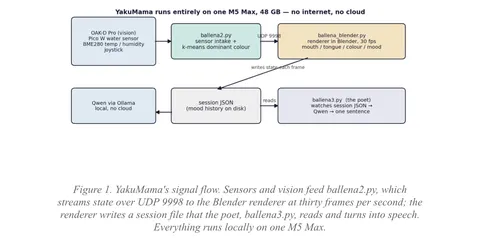
YakuMama reads the colour of the room and answers with mood and song, decaying and reweighting ten emotions every frame, diving when the water is taken and singing when the rain comes, all running locally on one machine with no cloud.
, Cochabamba
The body decides the interface
The gecko learns finger puppeteering, the monkey begins to mirror directly, Huk the Jaguaress discovers her own skeletal logic, and a taxonomy of locomotion emerges.
, Cochabamba
The monkey learns the shape of its own body
Procedural tails, swing-twist quaternion decomposition, performer-centered quadruped animation, and the discovery that rest poses themselves carry assumptions about bodies, movement, and intelligence.
, Cochabamba
The monkey learns to move: quaternions, humanoid puppeteering
Quaternion retargeting, hybrid body-hand tracking, spine cascade systems, and the first full-body humanoid creature pipeline inside our ecosystem.
, Cochabamba
The llama learns to feel, the model learns to listen, and Yakumama is born
Neural network mood training, cardiac breathing systems, Yakumama’s emergence, and ch’ixi philosophy entering the animation pipeline.
, Cochabamba
When the heartbeat moves the flower
Pulse sensors, ESP32 systems, systole and diastole translated into real-time plant animation and embodied computational creativity.
, Cochabamba
The spider learns to weave, the gecko learns to feel, and SIGGRAPH calls
Orb-web systems, gecko emotional memory, Qwen integration, and SIGGRAPH documentation.
, Cochabamba
The gecko learns to feel, Qwen 3.6 finds its voice, and the recording begins
Sensor fusion, emotional state systems, flavor memories, AI narration, and real-time creature cognition.
, Cochabamba
15 creatures, 14 pipelines and a platform-agnostic brain
Building real-time creature intelligence systems across Blender, VR, sensors, and XR worlds.
, Cochabamba
The water lily learns to breathe, the sundew counts fingers, and the pipeline moves to WebSocket
Victoria Regia water sensing, Drosera finger tracking, hummingbird gaze systems, and WebSocket architecture migration.
, Cochabamba
The tree learns fear, the orchid mourns fire, and the llama finds stillness
NASA wildfire feeds, shy trees with infrared sensing, and calibration systems for nonhuman creature embodiment.
, Cochabamba
The $2 gyroscope that solved what the neural network couldn’t
Sensor fusion, 360° body tracking, gyroscopes, MediaPipe limitations, and embodied spatial intelligence.
, Cochabamba
Toward embodied intelligence for nonhuman characters
Depth sensing, robotic cameras, MediaPipe integration, and spatial movement systems beyond human pose datasets.
, Cochabamba
Somatic puppeteering across plants, birds and heartbeats
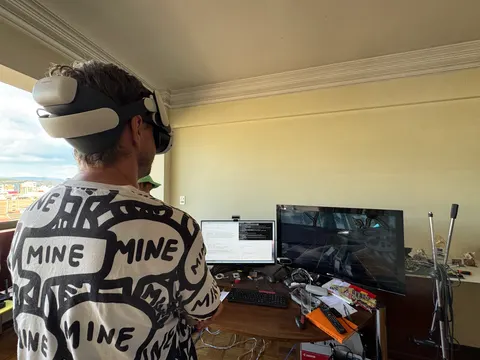
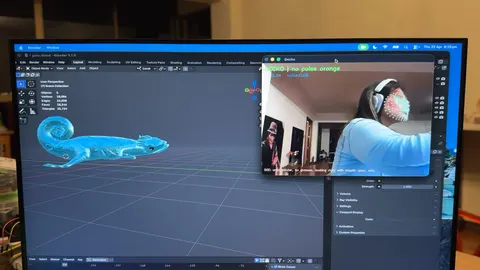
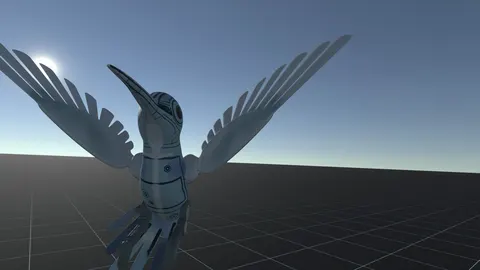
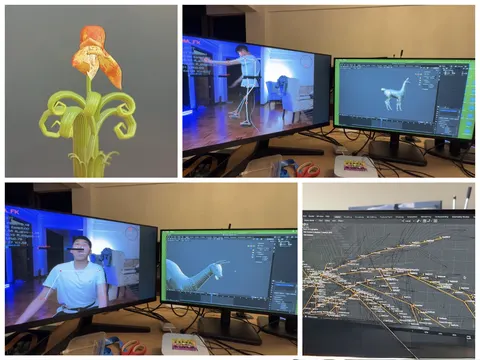
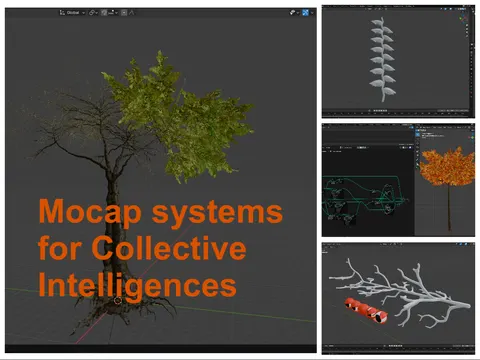
March 2026 research sprint exploring real-time body-driven creature systems across plants, condors, shaders, and pulse-responsive environments.



2025
, Cochabamba
When documentary begins to think
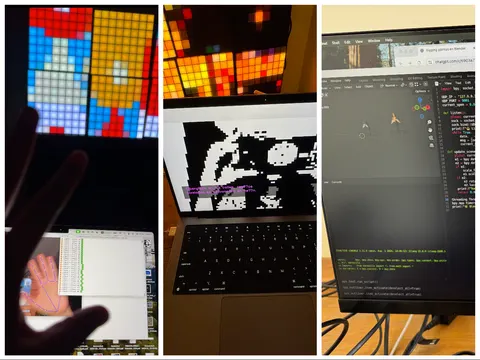
Two weeks on two fronts. In the lab, motion systems and pixel surfaces that react to movement. In the streets of Cochabamba, the Comteco vigil filmed and streamed as it happens.
, Cochabamba
Technologies of distribution, Comteco and the fight for transparency
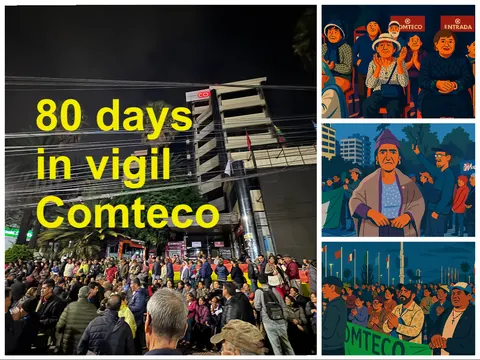
For 88 days the senior shareholders of the telecom cooperative Comteco hold a vigil for elections, audits and answers. TikTok becomes a living archive of the protest.
, Cochabamba
From documentary to living systems
Affective computing between Montreal and La Paz, new worlds for Huk, and public subsidies, music interfaces, electoral data and aqueducts read as technologies of distribution.
, Guangzhou
The condor obeyed Violeta’s hand
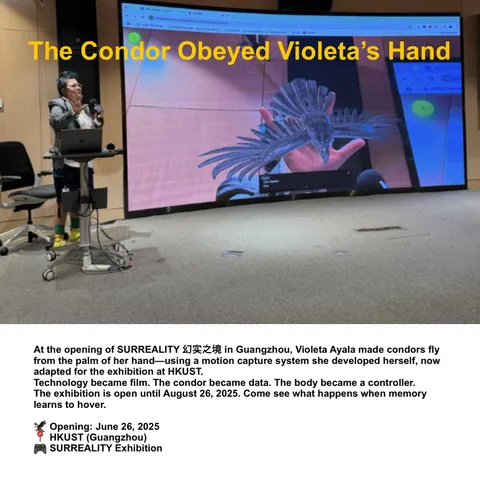
At the opening of Surreality in Guangzhou a digital condor follows Violeta Ayala’s hand in real time. No motion capture suit. An early public demonstration of somatic puppeteering.
, Copenhagen
Building Huk V1.0: a digital deity for the burning Amazon
Huk the Jaguaress begins with the fires in the Amazon. Her first version connects wildfire alerts, plant bioelectricity, dancers and edge AI.
, Nottingham
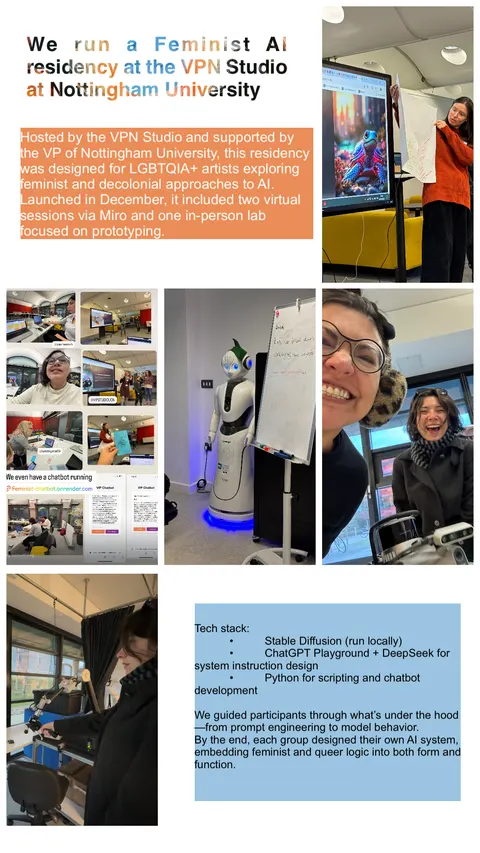
Two machines, one question: feminist AI at the VIP Studio
Violeta Ayala and Yasmeen Hitti join the Feminist AI residency at the University of Nottingham’s VIP Studio. They build the VIP Chatbot, where OpenAI and DeepSeek answer the same prompt side by side.
2023
Exploring the future of XR and AI: a conversation with Kent Bye
Violeta Ayala talks with Kent Bye on the Voices of VR podcast about XR, AI and creative sovereignty.
Shaping policy for the arts and cultural sector
The submission of United Notions Film to the NSW Arts, Culture and Creative Industries policy: interdisciplinary programs, cultural diversity and an art and technology exchange.
, Sydney
Violeta Ayala’s mission: creating LUNA, the future of feminist AI
Violeta Ayala introduces LUNA, Learning Unbiased Neural Algorithm: a project and a documentary about building an AI that challenges bias.
, Sydney
Prison X: unlocking the Gen Z code
From Sundance to Paris and SXSW Sydney, Gen Z visitors move through Prison X by instinct while older audiences walk in circles.
, Sydney
La Lucha and Prison X at SXSW Sydney
The Australian premiere of La Lucha and the Sydney premiere of Prison X at SXSW Sydney.
, London
Las Awichas selected for the major GLoW3 exhibition in London
Las Awichas is one of four new commissions of the GLoW3 Artist Programme at King’s College London. How the work began in Tiupampa and Pocoata, and a diary of the first days in London.
La Lucha receives support for outreach
The Perspective Fund backs the outreach of La Lucha across Latin America.
La Lucha premieres at BlackStar Film Festival: a night to remember
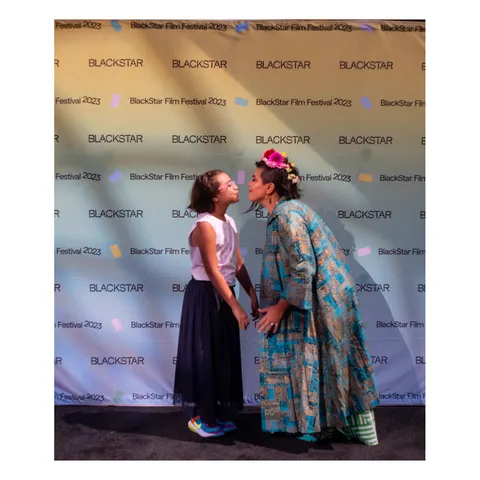
La Lucha premieres at BlackStar Film Festival in Philadelphia. The team, the guests, the reviews and the opening night.
, New York
Violeta Ayala wins the XR Innovation 2023 award at Brain Jam, Games for Change, New York
At Brain Jam in New York six creators build twelve worlds of self-representation in 27 hours, starting from Aunt Victoria in Tiupampa. The work wins an Innovation Award.